埃赛力达是一流的光子学创新企业,在我们涉猎的多个市场和技术领域中,公司的技术专家积极向行业期刊和行业媒体投稿。我们不仅提出了关于新技术、市场和应用趋势以及行业挑战的相关见解,还与客户和业内保持联系,始终致力于打造思想领袖的声誉。
请定期访问,通过在线精选评论档案及时了解情况。
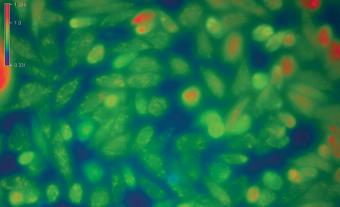
Award-Winning LED Illumination for Fluorescence from Fura-2 to Cy7.5 and Beyond
Microscopy Today
Read Excelitas’ article for an overview of the latest advances in illumination for fluorescence imaging, from near-UV to near-IR fluorophores. The article also highlights case studies demonstrating the 2021 Microscopy Today Innovation Award-winning X-Cite® NOVEM™ as successful replacements for traditional arc lamps in calcium imaging applications, producing equivalent results with the convenience of LEDs.

Utilizing Upper-Air UVGI in the Fight Against COVID-19
Health Europa
Read Excelitas’ article, “Utilizing upper-air UVGI in the fight against COVID-19,” by James Clements, Director of Channel Management, Product Marketing, in Health Europa to learn about the effectiveness of utilizing upper-air disinfection in contagion control, as well as to catch up to speed on the latest advances that are enabling occupant-safe operation in the fight against COVID-19.

How Single-Photon Counting Enables Countless Applications
Photonics Spectra
Looking to the future, single-photon detection will enable new applications: increasing LiDAR range while ensuring the laser source remains safe for people’s eyes in autonomous vehicles; secure communications, by detecting the single photons used for 1s and 0s in Quantum Key Distribution (QKD) and by detecting entangled photons and calibrating the single-photon generators needed; in quantum computing, both by detecting the single photons used to generate or interrogate qubits; and many more.
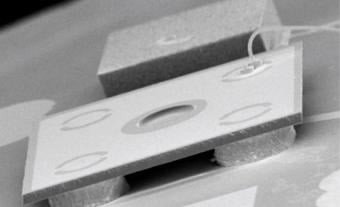
The Evolution of Single-photon Detection
Laser Focus World
Single-photon detection has become a vital tool in many applications, from single-molecule fluorescence, particle characterization through scattering, and quantum cryptography to astronomy, lidar, and more. The concept appears to be simple in principle—one photon creates one electron in a photodiode or when hitting a metal surface—but how easy is it to detect that single electron?
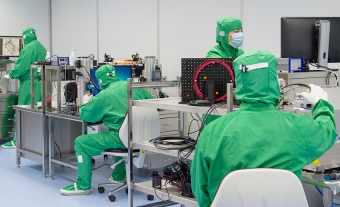
The Single-Source Partner for Photonic Solutions
Semiconductor Review
As the silicon chips that power today’s devices and technologies continue to shrink in size, manufacturing processes increasingly necessitate higher-resolution illumination and imaging, better performance, and strict contamination control.

Qioptiq Ltd. an Excelitas Technologies Company, Wins Aviation Week Program Excellence Awards
Aviation Week
Honoring excellence in program leadership, Qioptiq, an Excelitas Technologies Company, was chosen as the winner of the Supplier System Production category, for the production ramp of its relay optical assembly for the F-35 Joint Strike Fighter helmet.